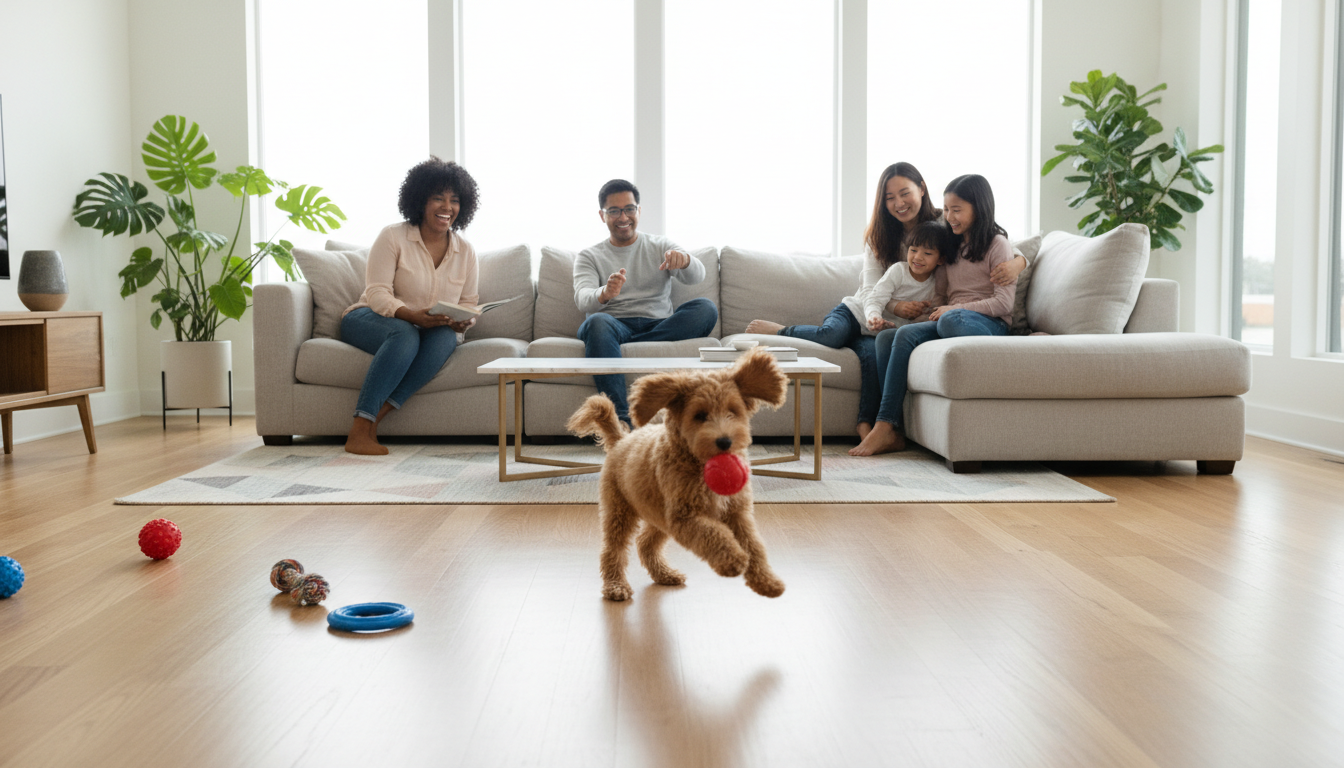
If you've ever come home after a long day and been greeted by a dog bouncing off the walls, you've probably thought the same thing most dog owners think:
"My dog needs more exercise."
Sometimes that's true.
But sometimes the answer isn't another mile, another game of fetch, or another trip around the block.
Sometimes your dog needs something to think about.
One of the biggest things dogs have taught me is that being physically tired and being mentally satisfied aren't always the same thing. People know this too. Have you ever spent an entire day running errands and somehow still felt restless when you sat down? Meanwhile, there are days you spend an hour solving a difficult problem or learning something new and feel completely drained afterward.
Dogs can be a lot like that.
Many dogs were bred to work. Some were bred to hunt, some to herd, some to track, and some to make decisions alongside people. Even our pets still have those instincts. When they don't have an outlet for them, they often create one for themselves. That's when we start seeing excessive barking, chewing, pacing, digging, or the famous evening zoomies.
The good news is that helping your dog use their brain doesn't have to take hours.
Why Busy Families Need a Different Kind of Routine
If you're juggling a Dallas commute, school drop-offs, and dinner, the last thing you need is another hour-long chore. And here's the thing: your dog doesn't need that either.
A long walk is wonderful when you can manage it. But it's not the only way to help your dog feel settled. What most dogs are missing isn't more miles. It's a chance to use their brain.
When a dog doesn't have a productive outlet for their instincts, they make one up. That's where the barking, pacing, and chewing come from. A calm dog routine for busy families works because it gives your dog something meaningful to focus on, in just a few minutes a day.
Tired Isn't the Same as Satisfied
Here's what I've learned: being physically tired and being mentally satisfied aren't the same thing.
You can run a dog for miles and still end up with a restless, wired pup. Exercise is healthy, but it can also build endurance. The more you run them, the more they seem to need. It's a treadmill that never quite ends.
Mental work is different. Ten minutes of focused sniffing or problem-solving can settle a dog as much as a much longer walk. And on a hot Dallas afternoon, when the pavement is too warm for paws, a quiet indoor game is the kinder choice anyway.
Calm isn't created by exhaustion.
It's created by satisfaction.
A dog whose mind has been engaged settles much more easily than a dog who is simply worn out.
A Simple 10-Minute Morning Routine
You don't need fancy equipment or a lot of time. Here's a gentle sequence you can do in about ten minutes, before you head out the door.
Minutes 1 to 3: Let them sniff. Hide a handful of small treats around one room while your dog waits. Then say "find it" and let them search. Sniffing naturally slows a dog's heart rate and gives their brain a satisfying job to do.
Minutes 4 to 7: A little patience. Ask for a simple sit or down, and reward them for staying put. This isn't about tricks. It's about helping your dog practice being still, which takes real focus.
Minutes 8 to 10: Wind down. Offer a lick mat or a stuffed toy with a little spread on it. Licking is soothing for dogs. It's a gentle way to help their nervous system power down before you leave.
That's it. Ten minutes, and your dog has had a real job to do. They're far more likely to settle in for a quiet morning than to pace the windows.
A Few More Ways to Engage Their Mind
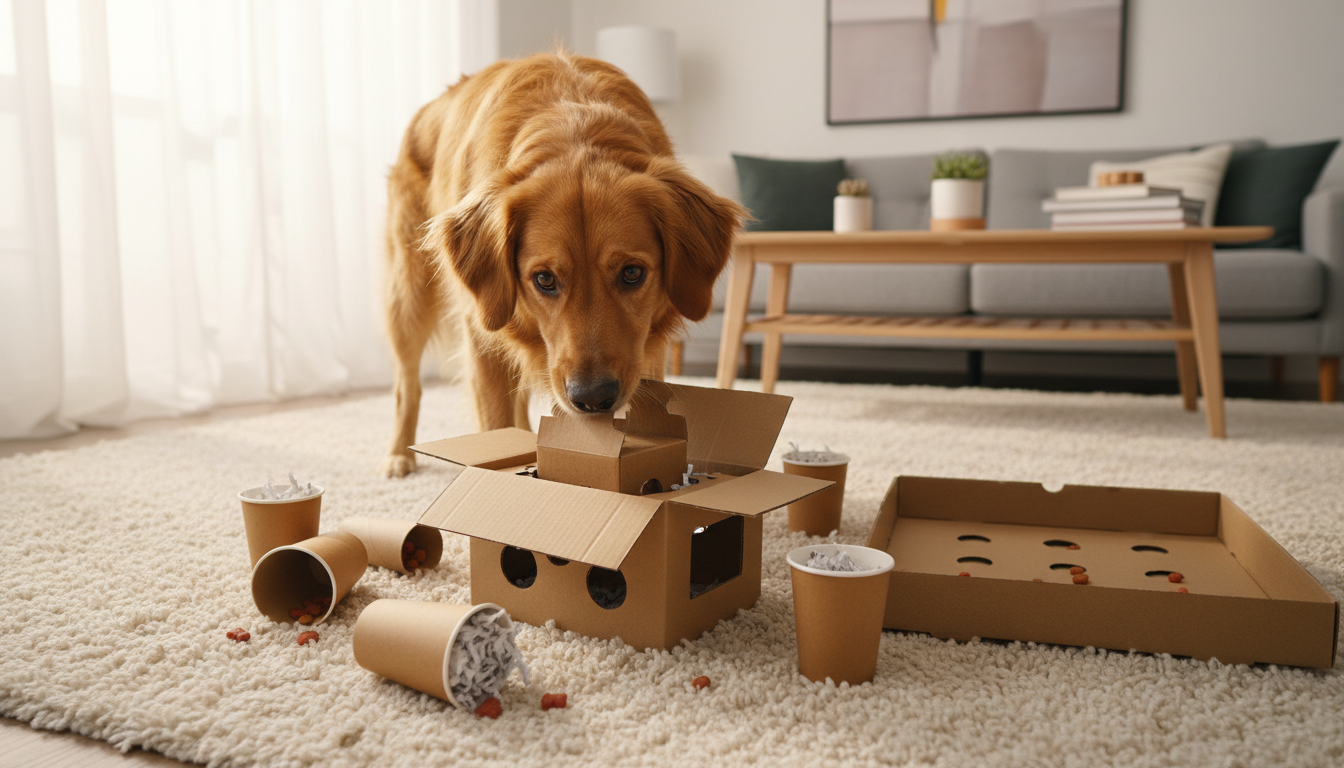
You don't need a big backyard to give a high-energy dog a satisfying day. A hallway, a rug, and a few household items are plenty.
The rolled towel game is a favorite. Lay a towel flat, sprinkle some of your dog's meal across it, and roll it up. For a challenge, tie it in a loose knot. Your dog gets to use their paws and nose to solve a little puzzle.
The cup game is another easy one. Hide a treat under one of three cups, shuffle them, and let your dog figure out which one holds the prize.
Hallways are perfect for nose work. Tuck a few treats at different heights, behind a door frame or on a shoe rack, and let your dog hunt. It's the same kind of focus a long hike would give them, in a fraction of the time.
Give Them a Place to Settle
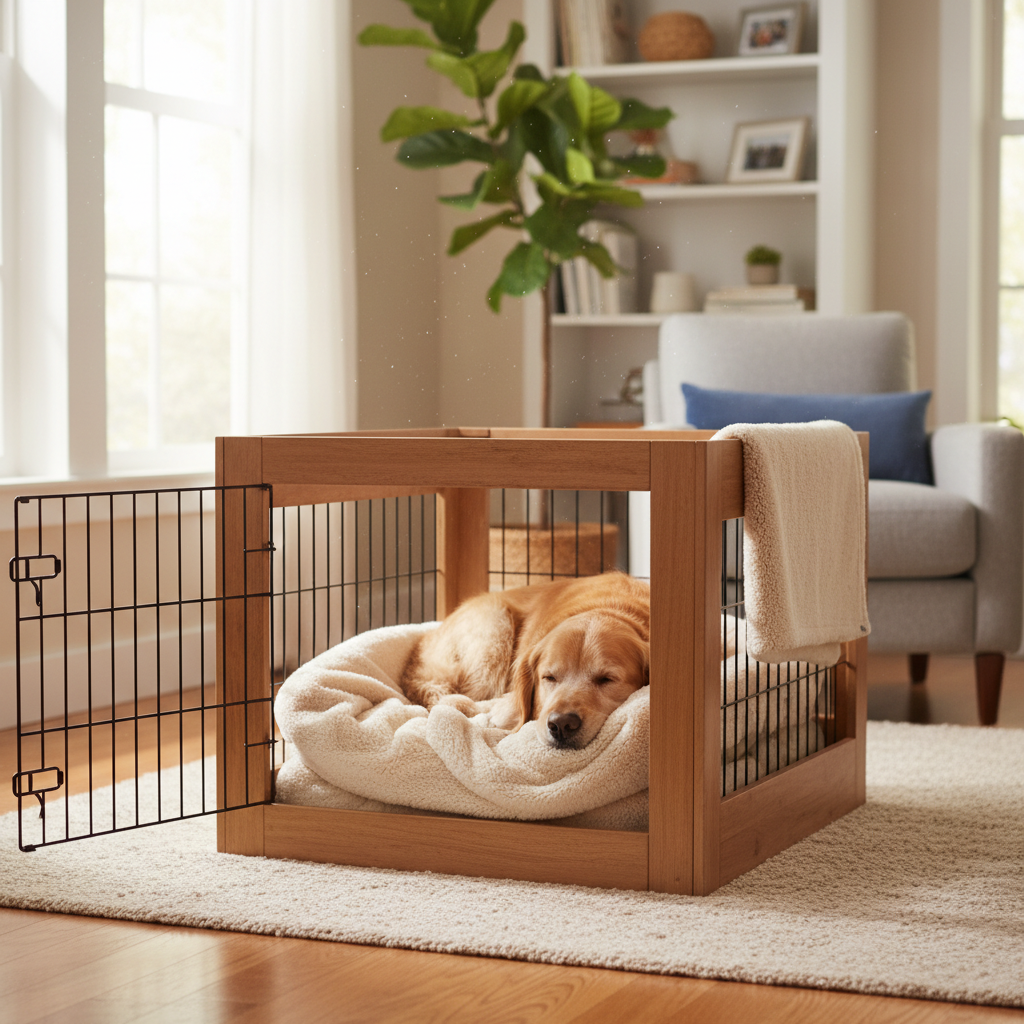
Just like a leash means "walk," a cozy spot can mean "rest." Pick a quiet corner, away from the kitchen and the front door, and make it your dog's calm zone. A soft bed or a draped crate works beautifully.
Soft background noise can help too. A fan or some gentle music can muffle the sounds of traffic and sirens, telling your dog's nervous system it's time to downshift.
If you have kids, teach them that when the dog is in their calm zone, they're off duty. No touching, no calling. It's a small boundary that makes a big difference during the busy parts of the day.
A Gentler Way to Come Home
The moment you walk in the door sets the tone. If you meet your dog's excitement with high-energy play, you can accidentally teach them that coming home means party time.
Try a quiet entry instead. Put your keys and bags away first, without a big greeting. Then wait for your dog to offer a calm behavior, like a sit or a down, and reward that with soft praise. It teaches them that calm is what earns your attention.
A little sniffing game after that, a few treats scattered on the rug, helps them settle into the evening.
Small Steps, Better Days
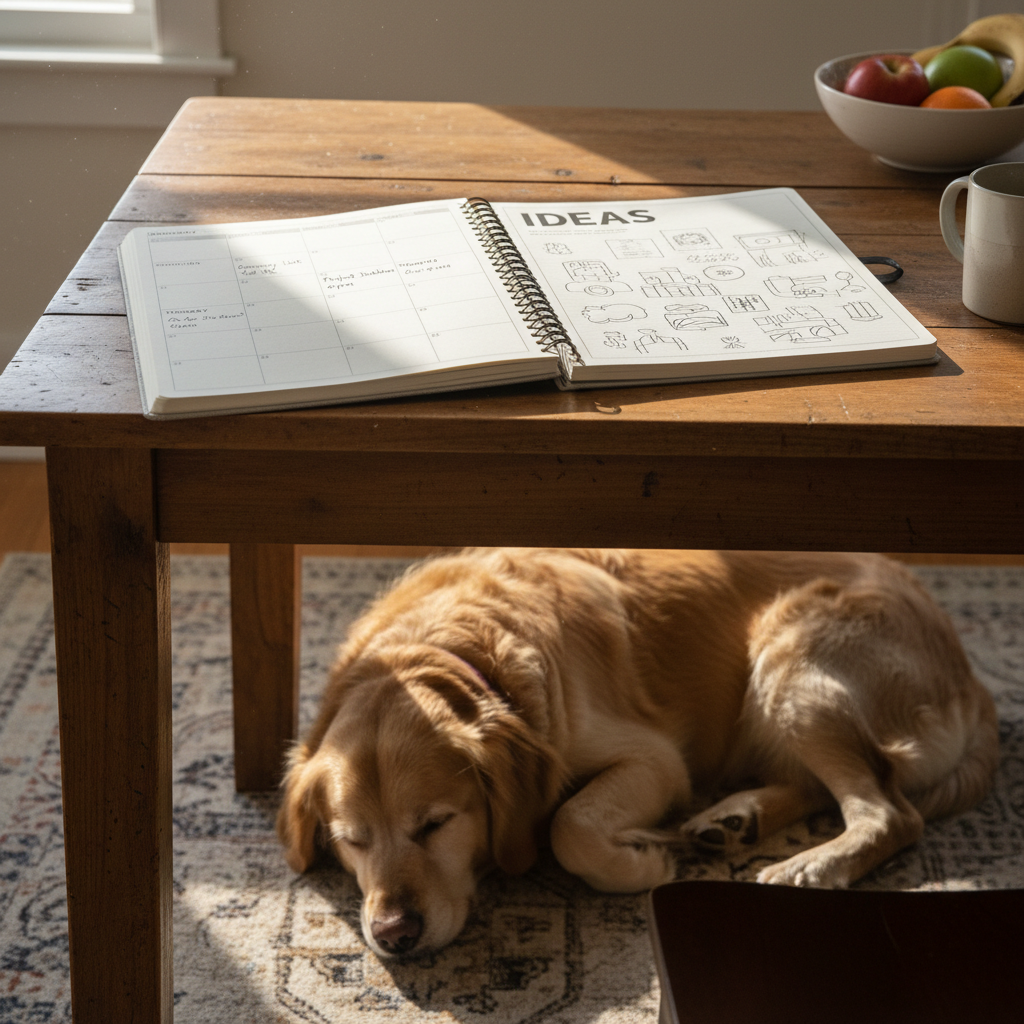
You don't have to be perfect. You just have to show up for a few minutes a day. Consistency matters more than intensity, and the small moments add up faster than you'd expect.
The next time your dog seems restless, try asking a different question.
Instead of "What can I do to wear my dog out?"
Ask "What can I do to engage my dog's mind?"
You may discover the calm you're looking for isn't at the end of a longer walk. It might be hiding inside a five-minute game of hide-and-seek.
And honestly, that's one of the many things dogs have taught me. Sometimes being busy isn't what we need. Sometimes we just need something meaningful to focus on.
If you'd like a simple place to start, grab our free 10-Minute Calm Dog Routine. It's a gentle daily practice made for busy families, and it's yours to keep.